
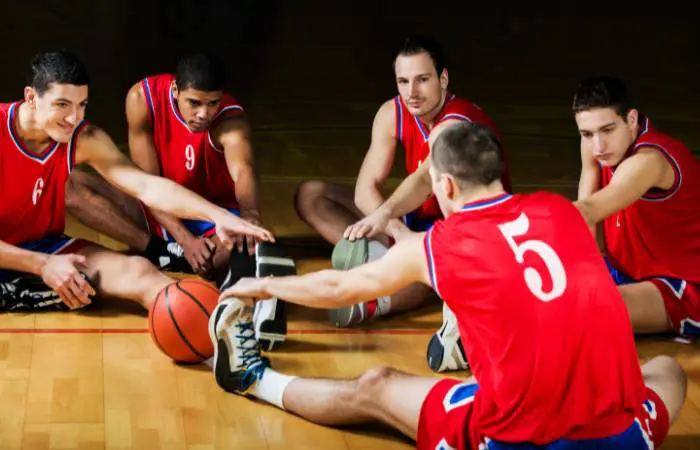
Basketball is widely celebrated as a fast-paced, high-flying sport that captivates millions of fans around the world. Beyond the dramatic buzzer-beaters, flashy crossovers, and highlight-reel dunks, the sport serves as a powerful incubator for personal growth and character development. Players who spend time on the hardwood quickly realize that success in basketball requires far more than physical athleticism or natural talent. It demands a sophisticated blend of interpersonal coordination, rigorous self-control, and strategic vision.
Whether played in youth leagues, high school gymnasiums, college arenas, or neighborhood parks, basketball acts as a dynamic classroom for essential life skills. The unique structure of the game, featuring five players working in tight spaces with rapid transitions between offense and defense, creates an environment where personal ego must yield to collective strategy. Through continuous practice and competitive play, basketball systematically instills teamwork, discipline, and leadership skills that extend far beyond the final whistle and translate directly into academic, professional, and personal environments.
The Foundation of Teamwork on the Court
Teamwork in basketball is not merely a helpful dynamic; it is an absolute operational requirement. Unlike sports where individual performances can be isolated, basketball relies on total alignment among all five players on the floor. A single breakdown in communication or individual neglect of responsibility can instantly result in an easy score for the opposing team.
Mutual Reliance and Spatial Awareness
Every offensive possession in basketball requires precise coordination. Players must constantly read the court, execute off-ball screens, cut into open space, and share the ball to find the highest-probability shot. A player who attempts to score entirely on their own against a set defense rarely succeeds over time. Basketball teaches athletes that moving the ball creates opportunities for everyone. When a player makes an extra pass to a teammate with a better angle, they internalize the principle that collective goals supersede individual glory.
Communication Under Pressure
Communication on the basketball court is constant and multi-layered. Because the game moves at an intense pace, players must communicate both verbally and non-verbally in real time. On defense, players must call out screens, announce help responsibilities, and identify open shooters. On offense, subtle eye contact, hand gestures, and quick verbal cues dictate complex tactical adjustments. This environment forces individuals to overcome shyness, articulate clear directions under stress, and actively listen to their peers.
Shared Accountability and Trust
Building effective teamwork requires trust. A defender must trust that their teammate will slide over to help if an offensive player drives past them. An offensive player cutting to the basket must trust that the ball handler will deliver a pass at the precise moment they break free. This interdependence fosters deep accountability. When mistakes happen, players learn to address errors constructively rather than shifting blame, understanding that every victory and defeat is shared equally by the entire group.
Cultivating Discipline Through Consistency and Commitment
Discipline is the engine that transforms potential into performance. Basketball demands a high degree of physical and mental discipline, requiring athletes to embrace repetitive training, master intricate plays, and regulate their emotions during intense competition.
Mastery of Fundamentals Through Repetition
No athlete becomes an elite basketball player overnight. The fundamentals of the game, including footwork, shooting mechanics, ball-handling, and defensive stances, require hundreds of hours of deliberate practice. Basketball teaches individuals the value of routine and delayed gratification. Standard drills can feel monotonous, yet players learn that long-term excellence is built through daily commitment to basic tasks. This understanding directly fosters a disciplined work ethic that benefits students in their studies and professionals in their careers.
Tactical Adherence and Execution
High-level basketball requires intense mental discipline. Teams operate using complex playbooks filled with specific offensive patterns and defensive rotations tailored to counter opponents. During a game, players must exercise self-restraint by sticking to the game plan even when fatigue sets in or emotions run high. Resisting the urge to take bad shots, maintaining proper defensive positioning, and executing assignments with precision demonstrate a mature level of cognitive discipline.
Emotional Regulation and Stress Management
Basketball is a game of continuous runs and momentum shifts. Referees make questionable calls, shots fail to drop, and opponents execute impressive plays. Maintaining composure amidst these fluctuations is a key component of emotional discipline. Basketball teaches athletes how to reset immediately after a mistake, manage frustration, and remain focused on the next play. Learning to stay calm under physical exhaustion and intense audience pressure prepares individuals to navigate real-world stress with poise and resilience.
Developing Essential Leadership Skills
Leadership on the basketball court manifests in various forms, from the vocal point guard directing the offense to the quiet bench player who elevates team morale through relentless energy. The sport provides a natural testing ground where individuals learn how to motivate, guide, and support others.
Leading by Example and Setting Standards
True leadership starts with personal accountability. On a basketball team, the most influential leaders are often those who work the hardest in practice, dive for loose balls, and demonstrate unyielding commitment to team standards. When a player consistently displays a high energy level and positive attitude, it sets a baseline for the rest of the squad. This form of leadership by example teaches athletes that authority and influence are earned through consistent effort and integrity rather than assigned titles.
Strategic Decision-Making and Court Vision
Point guards and team captains are often referred to as coaches on the floor. They must evaluate the game dynamically, assess opponent weaknesses, recognize which teammates have the hot hand, and manage the game clock effectively. Making sound decisions in fractions of a second trains athletes to think critically under constraint. These experiences cultivate strategic foresight, allowing emerging leaders to analyze complex scenarios, evaluate risks, and make firm decisions in high-stakes environments.
Mentorship, Empathy, and Constructive Feedback
Great basketball leaders know how to uplift their teammates. They recognize that different individuals respond to different forms of motivation. Some teammates need encouraging words after an error, while others require firm accountability. Effective leaders develop emotional intelligence by learning how to deliver constructive feedback without creating friction. By mentoring younger players and celebrating the contributions of bench players, leaders foster an inclusive culture where every member feels valued and driven to contribute.
Translating Basketball Skills to Real-World Success
The lessons learned on the basketball court extend far beyond athletic competition. The combination of teamwork, discipline, and leadership acquired through the sport provides a strong foundation for lifelong achievement in diverse areas of life.
-
Professional Collaboration: Modern workplaces rely heavily on cross-functional teams. Former basketball players naturally understand how to fit into group dynamics, leverage individual strengths, and collaborate toward shared corporate goals.
-
Time Management and Prioritization: Balancing rigorous basketball practice schedules, weight training sessions, and travel commitments alongside academic or professional duties teaches individuals how to organize their time efficiently.
-
Adaptability and Problem-Solving: Basketball games are unpredictable, requiring constant tactical adjustments. Athletes learn to adapt to changing circumstances quickly, a mindset that enables professionals to navigate market shifts and unexpected challenges effortlessly.
-
Resilience in the Face of Adversity: Facing tough losses and recovering from physical setbacks instills a growth mindset. Basketball players learn to view failures not as permanent defeats, but as valuable feedback necessary for future improvement.
Frequently Asked Questions
How does playing basketball at a young age impact early childhood social development?
Playing basketball early in life helps children develop fundamental social behaviors such as sharing, taking turns, and following rules. It offers a structured environment where young athletes learn to interact with peers from diverse backgrounds, build empathy through shared experiences, and develop foundational verbal communication skills through team activities and guided play.
Can casual pick-up basketball provide the same character-building benefits as organized team play?
While organized basketball offers structured coaching and formal accountability, casual pick-up games offer unique character-building benefits. Pick-up basketball requires players to self-regulate, call their own fouls, settle disputes amicably without referees, and adapt quickly to unfamiliar teammates. This informal environment builds strong conflict resolution skills, independence, and spontaneous adaptability.
What specific drills best nurture court vision and decision-making for aspiring leaders?
Small-sided games, such as three-on-three or four-on-four scenarios with specific rules or time constraints, are exceptionally effective for developing court vision. Advantage-disadvantage drills, where the offense temporarily outnumbers the defense, force players to quickly read space, evaluate options, and make decisive passes under pressure, directly enhancing strategic decision-making ability.
How do coaches balance individual star talent with team-first discipline?
Effective coaches balance individual talent with team discipline by establishing clear, non-negotiable team standards that apply equally to every player regardless of skill level. They channel a star player’s abilities into roles that elevate the entire group while emphasizing that individual accolades are the natural byproduct of overall team success and disciplined execution.
What role does film study play in developing strategic thinking on the basketball court?
Film study allows players to analyze game play objectively away from the physical demands of the court. It enhances strategic thinking by helping athletes identify patterns, recognize opponent tendencies, understand spatial spacing, and evaluate their own decision-making process. This visual analysis sharpens basketball intelligence and translates into faster, more informed reactions during live competition.
How does basketball help athletes overcome failure and build psychological resilience?
Basketball provides constant micro-failures, such as missed shots, turnover errors, or lost games, within a controlled setting. Because the game moves rapidly, athletes cannot dwell on mistakes without compromising the next play. This immediate feedback loop conditions players to process errors quickly, focus on actionable solutions, and maintain a forward-looking mindset in the face of setbacks.
In what ways do off-court team bonding activities reinforce on-court basketball chemistry?
Off-court bonding activities, such as shared meals, team travel, and community service, build personal trust and mutual understanding among players. When athletes know and care about each other outside the gym, their on-court communication improves, tolerance for constructive criticism increases, and their willingness to make selfless plays for one another becomes second nature.