
Cross-training with yoga is not a new idea for Singapore’s athletic community.
Runners use it for hip mobility. Triathletes use it for recovery. Team sport athletes use it for injury prevention.
But most athletic yoga cross-training programmes treat the yoga wheel as a peripheral prop rather than a primary tool. The wheel rolls out for a brief thoracic extension and then disappears back into the prop storage.
This is leaving performance benefits on the table.
The yoga wheel has specific, high-value applications for the three athletic populations that make up a significant portion of Singapore’s active sports community: swimmers, cyclists and competitive climbers. Each sport creates specific mobility and strength deficits. The yoga wheel addresses each of them in ways that general yoga props cannot match.
Swimmers: Shoulder Mobility and Thoracic Rotation
Swimming performance depends on shoulder health more than almost any other individual sport.
The freestyle and butterfly strokes require full overhead shoulder mobility, shoulder external rotation strength, and the thoracic rotation that allows the body roll that efficient swimming mechanics depend on. The volume of shoulder loading in competitive swimming, thousands of stroke cycles per training session, makes the maintenance of these mechanical prerequisites not simply a performance variable but a injury prevention imperative.
The specific deficits that competitive swimmers develop are well documented.
Shoulder internal rotation dominance from the pulling phase of all freestyle strokes progressively reduces external rotation range. Anterior shoulder capsule tightening from the loading pattern of water resistance through the pull creates the internal rotation bias that underlies most swimming-related shoulder pathology.
The yoga wheel addresses these deficits through two specific applications.
Thoracic extension with lateral rotation bias. The practitioner supports the thoracic spine on the wheel and, from an extended position, rotates the upper body to one side while maintaining the wheel as a pivot point. This creates a combined extension and rotation mobilisation of the thoracic segments that directly addresses the thoracic rotation restriction that impairs body roll mechanics and forces compensatory lumbar rotation.
Anterior shoulder opening in supported extension. The practitioner kneels with the wheel behind them, reaches back to place both hands on the wheel surface, and uses the wheel’s circular support to open the anterior shoulder in a position that directly lengthens the anterior capsule and pectoralis minor — the structures that anterior shoulder tightness most commonly implicates in swimmers.
Frequency for competitive swimmers: three to four times weekly, immediately following pool training when tissue temperature is elevated.
Cyclists: Hip Flexor Length and Lumbar Mobility
Competitive cyclists in Singapore face a specific and severe postural challenge.
The aerodynamic riding position demands sustained hip flexion, thoracic flexion and cervical extension for hours at a time. The body adapts to this demand exactly as the principles of connective tissue adaptation would predict: the hip flexors shorten, the thoracic spine stiffens in flexion, and the cervical extensors develop the tension patterns that sustained contraction under load produces.
These adaptations improve aerodynamic efficiency on the bike. They impair movement quality, spinal health and long-term athletic longevity off it.
The yoga wheel provides the most effective hip flexor lengthening position available outside of a clinical setting.
Supported hip flexor extension. The practitioner kneels with the yoga wheel positioned at the upper shin of the back leg. They drive the pelvis forward into a low lunge position, using the wheel’s height to allow a greater range of hip extension than a floor-based low lunge permits. The wheel’s circular surface also creates a gentle rocking component that prevents the sustained static loading that static stretching produces, maintaining fascial compliance through the movement.
The additional height that the wheel provides under the trailing shin allows hip extension past the range that a floor lunge can achieve, reaching the deeper hip flexor length that competitive cyclists’ level of adaptive shortening requires.
Thoracic opening over the wheel. As described elsewhere in this series, the yoga wheel’s thoracic extension application directly counteracts the sustained thoracic flexion of the cycling position. For cyclists, this application has immediate performance relevance: improved thoracic extension allows a more efficient cervical spine position in the aero posture, reducing the cervical extensor load and the headache and neck pain patterns that many competitive cyclists manage chronically.
Frequency for cyclists: daily thoracic work, hip flexor work four times weekly.
Competitive Climbers: Hip External Rotation and Shoulder Stability
Competitive climbing in Singapore’s growing bouldering and route climbing community creates a distinctive athletic demand profile.
High hip external rotation is required for the high-step and heel-hook movements that technical climbing demands. Shoulder stability through the full overhead range is essential for the deadhang and movement-loading of the shoulder in overhead positions that climbing requires constantly.
These demands create two specific deficit patterns in committed climbers.
Hip flexion-internal rotation tightness from the sustained high-hip-position demands of technical footwork progressively reduces the external rotation range that is required for the most demanding movement sequences. The practitioner who cannot achieve adequate hip external rotation in a high-step position will compensate through lumbar rotation and pelvic tilting that places inappropriate loading on the lumbar spine and reduces the efficiency of the movement.
The yoga wheel’s figure-four position application addresses this specifically.
Supported figure-four on the wheel. The practitioner sits on the wheel, places one ankle across the opposite knee in figure-four position, and uses the wheel’s instability to find the hip position where the external rotation stretch is most specifically felt. The wheel’s instability requirement adds a neuromuscular demand that floor-based figure-four stretches do not create, recruiting the hip stabilisers in the stretched position in a way that produces active mobility rather than passive lengthening.
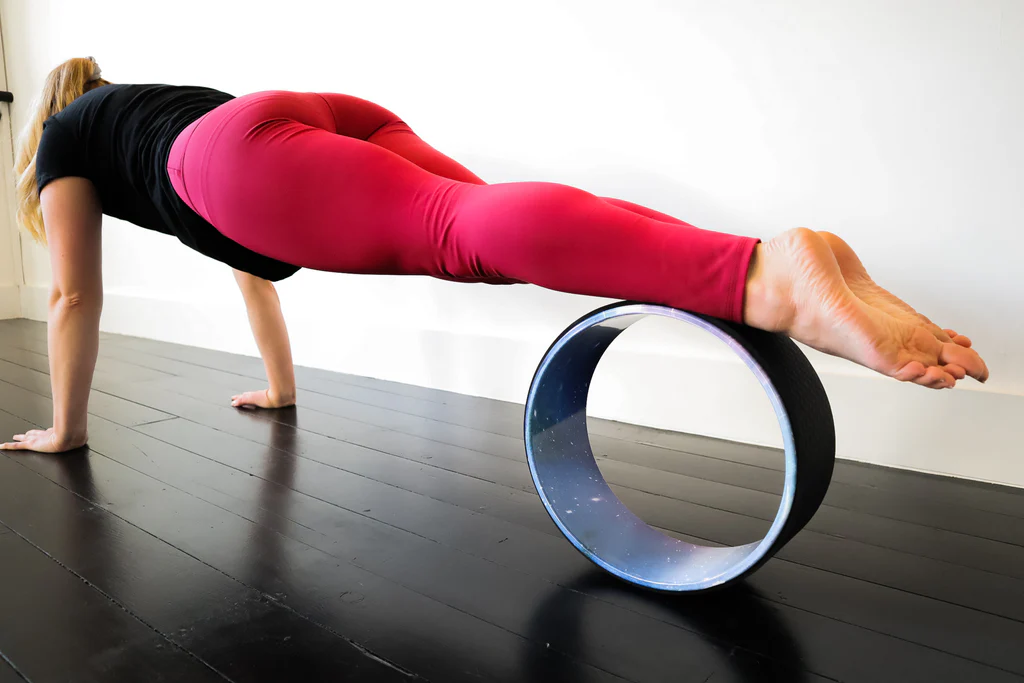
Shoulder stability work using the yoga wheel as a weight-bearing surface trains the rotator cuff muscles in the overhead positions that climbing demands. Supported plank on the wheel, pressing through hands placed on the wheel’s surface with arms in different positions progressively from vertical to increasingly inclined, loads the shoulder stabilisers through positions that replicate climbing’s overhead demand in a controlled, progressable format.
Yoga Edition and Singapore’s sports-oriented yoga community increasingly recognise that the yoga wheel is not a general wellness prop that happens to be useful for athletes. It is a precision training tool whose mechanical properties create specific conditioning opportunities for sport performance that no other commonly available prop replicates.